Free Online Search
Section 22A Protected
All 26 Districts Covered
Buyer Protection
What is the IGRS AP Prohibited Properties List?
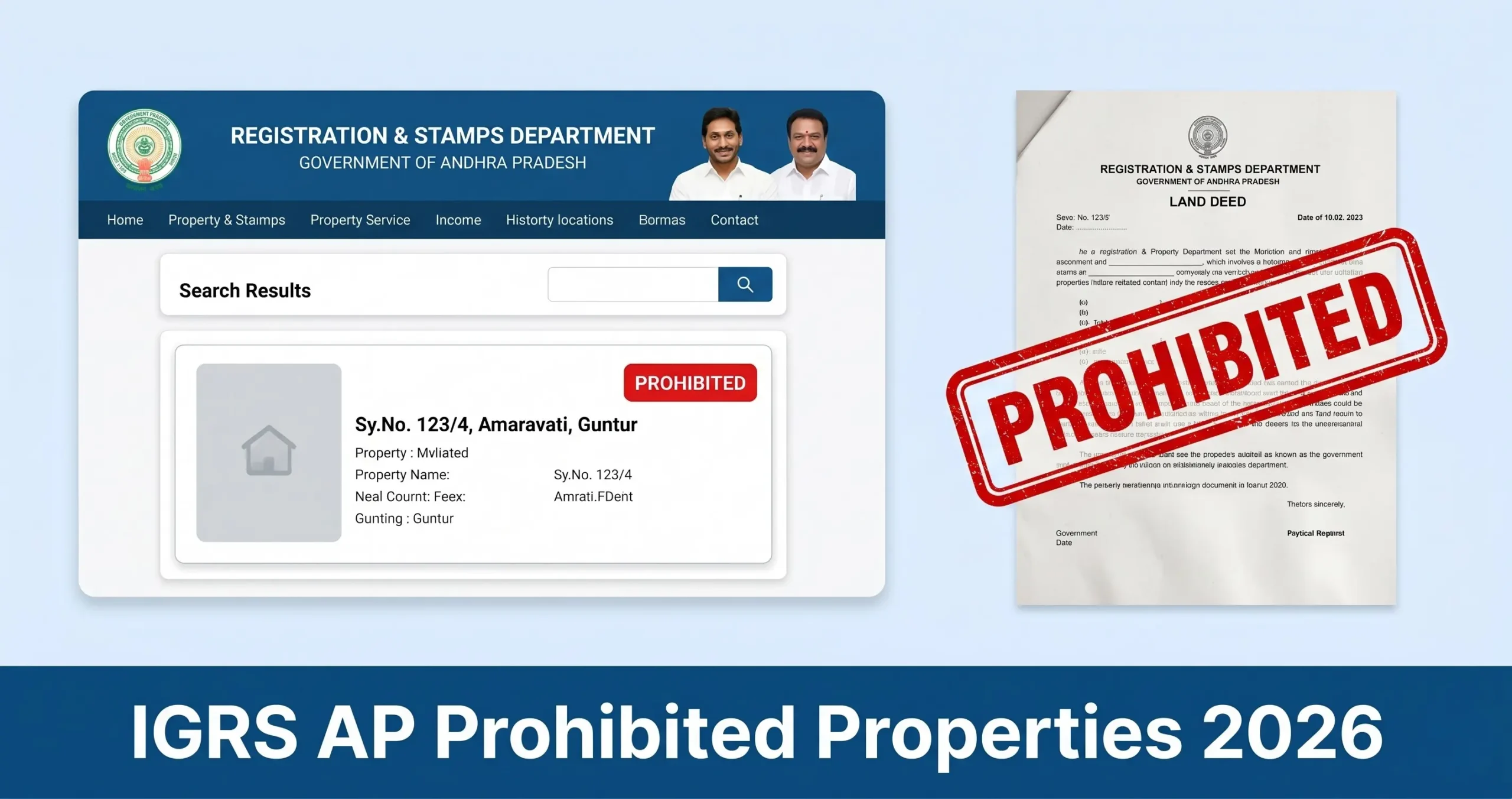
The IGRS AP Prohibited Properties List is an official online database maintained by the Registration and Stamps Department of Andhra Pradesh. It contains details of all properties across the state that are currently restricted from sale, purchase, or registration due to legal, governmental, or environmental reasons. If a property appears on this list, no Sub-Registrar Office (SRO) in Andhra Pradesh is permitted to process its registration regardless of buyer intent or payment.
This service is available at no cost through the official registration.ap.gov.in portal and covers both urban and rural properties across all 26 districts of Andhra Pradesh. Citizens, investors, lawyers, and financial institutions routinely use this check before entering any property transaction to avoid invalid deeds and future legal disputes.
The list is powered by the CARD (Computer-aided Administration of Registration Department) system and is updated regularly by government authorities. In 2026, the AP government has intensified enforcement and reform around prohibited properties, making this verification step more important than ever before buying land or a building in the state.
Important Notice: A clean Encumbrance Certificate (EC) does not guarantee a property is free from prohibition. Always check the Prohibited Properties list separately on the IGRS AP portal before making any advance payment or signing an agreement.
What is Section 22A and Why Does It Matter?
Section 22A of the Registration Act, 1908 is the legal provision that empowers the state government to prohibit registration of specific properties. In Andhra Pradesh, this section has been adopted as an administrative tool to prevent the illegal transfer of government assets and lands reserved for the protection of the poor and vulnerable sections of society.
When a property is added to the Section 22A list, the SRO computer system automatically blocks any registration attempt for that property. Neither the buyer nor the seller can override this restriction at the registration counter. Removal from the list requires a formal government order and, in most cases, approval from the District Collector.
2026 Government Order: Stricter Enforcement
On January 2, 2026, the AP government issued G.O.Ms.No.2 introducing critical amendments under Rules 181-A and 181-D. Rule 181-A empowers the Registrar to cancel documents that violate Section 22A even after registration has been completed. Rule 181-D grants the Inspector General of Registration and Stamps authority to initiate cancellation proceedings for fraudulently registered documents. These are the strongest anti-fraud measures introduced in AP property registration history.
Types of Prohibited Properties in Andhra Pradesh
The Section 22A prohibited list in AP covers the following major categories of restricted land:
22-A(1)(a): Assigned Lands
Lands granted by the government to landless poor individuals for farming or housing under various welfare schemes. These are restricted from sale to prevent exploitation of the original beneficiaries.
Government and Revenue Department Lands
Properties belonging to state or central government agencies, including poramboke lands, revenue department holdings, and lands managed by irrigation or forest authorities. These cannot be transferred to private parties without explicit government sanction.
Court Disputed Properties
Land parcels that are the subject of active civil litigation, injunction orders, or disputed title claims in courts at any level from district courts to the High Court. Registration remains blocked until the court matter is fully resolved.
Endowment and Religious Trust Lands
Properties managed by the Endowments Department, including temple lands and religious institution holdings, are non-transferable and strictly protected under the AP Charitable and Hindu Religious Institutions Act.
Forest and Environmentally Protected Lands
Land classified under the Forest Conservation Act, eco-sensitive zones, or environmental protection notifications. Any private transaction on such land is prohibited under both registration law and environmental statutes.
How to Check IGRS AP Prohibited Properties Online
Checking the prohibited property status in Andhra Pradesh is completely free and takes only a few minutes. No login or account registration is required. Follow these steps:
Open the Official IGRS AP Portal
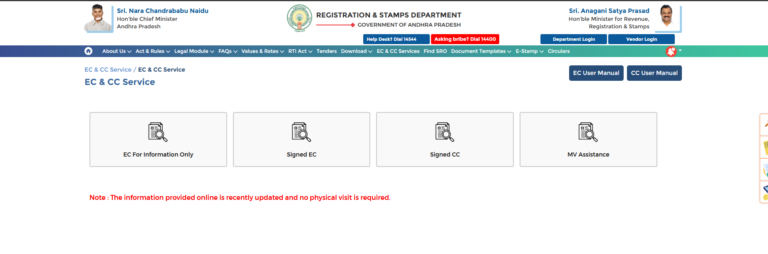
Open your browser and go to registration.ap.gov.in. This is the only official government portal for property verification in Andhra Pradesh. No separate login is needed for the prohibited properties search service.
Navigate to Prohibited Properties Search
On the portal homepage, locate the Online Services section. Look for the option labeled Prohibited Properties or Prohibited Properties Search and click on it to access the dedicated search interface.
Select District, Mandal, and Village
From the dropdown menus, select the correct District where the property is located, then choose the relevant Mandal and Village. These three fields narrow the search to the specific local jurisdiction managing that land parcel’s records.
Enter Survey Number or Door Number
Enter the property’s Survey Number for agricultural land or Door Number for urban properties. This is the unique identifier that links your search to the specific plot in the government database. Confirm these details from your sale agreement or existing title documents before entering.
View Results and Verify Status
The portal instantly displays the prohibited status of the property. If the result shows No Restriction, the property is currently eligible for registration. If the property appears in the prohibited list, the system displays the specific restriction category and reason. Do not proceed with any transaction until the restriction is cleared through proper legal channels.
2026 Update: Five Categories Removed from Prohibited List
The Andhra Pradesh government has officially declared 2026 as the Bhumi Nama Samvatsaram (Year of Land Reforms). Under Chief Minister N. Chandrababu Naidu’s leadership, the Revenue Department authorized the removal of five major land categories from the Section 22A prohibited list effective January 1, 2026. This reform aims to correct longstanding administrative errors that had frozen genuine private titles for years:
✅ Defence Personnel Lands
Plots assigned to both serving and retired soldiers are now eligible for removal from the restricted list.
✅ Freedom Fighters Lands
Properties granted to recognised national freedom fighters have been cleared for de-notification.
✅ Political Sufferers / Victims
Lands granted as compensation for past social or political injustice are now eligible for review.
✅ Pre-1954 Assignments
All genuine assignments made before June 18, 1954 are eligible for removal as original grants often lacked non-alienation clauses.
✅ Wrongly Listed Private Patta Lands
Genuine private titles mistakenly included in the prohibited list due to administrative errors are now being cleared.
Important: Even if your property falls under one of these five eligible categories, removal from the prohibited list is not automatic. It requires a formal application to the District Collector, field verification, a 30-day public objection period, and final government approval before the IGRS AP database is updated.
What Happens If You Buy a Prohibited Property?
Purchasing a property that is on the IGRS AP prohibited list carries serious legal and financial consequences that can be extremely difficult to reverse:
The Sub-Registrar computer system automatically blocks any registration attempt for a prohibited property. You cannot complete the legal transfer of ownership, rendering your entire investment legally invalid even after full payment.
Under the 2026 amendment (Rule 181-A), the Registrar can cancel a property registration even after it has been completed if it is later found to violate Section 22A. You may lose both the property and the money paid.
Banks and financial institutions will not approve home loans or mortgage facilities against a prohibited property because it cannot serve as valid legal collateral. Any existing loan application will be rejected during legal verification.
If you occupy or develop a prohibited property, you may face civil or criminal proceedings from government authorities, original landowners, or beneficiaries of assigned land schemes. Such disputes can take years to resolve in courts.
Common Issues and Solutions
This is a common occurrence due to historical data entry errors. Your property may qualify under the 2026 wrongly listed private patta lands category. File a formal application with supporting revenue documents at your District Collector office and request removal under the Bhumi Nama Samvatsaram drive currently in progress.
Double-check whether you are using the correct survey sub-division number. For urban properties, confirm the exact door number from your tax receipt or municipal records. If the property genuinely does not appear in results, this is a positive sign because no result means it is not currently in the prohibited list.
If a previously registered property is now showing a restriction following the 2026 enforcement changes, consult a registered property lawyer immediately. Do not attempt to sell or transfer the property until the legal status is clarified. Contact your local SRO or the IGRS AP helpline for guidance on next steps.
📚 Related Guides You May Find Helpful
- EC Online AP 2026 – Always run an EC check alongside the prohibited property search for complete title verification.
- IGRS AP Market Value 2026 – Check current government-notified land rates before finalizing any property deal.
- IGRS AP Slot Booking 2026 – Book your Sub-Registrar Office appointment after confirming the property is restriction-free.
- IGRS AP Certified Copy 2026 – Download an officially verified copy of any registered document for legal or bank use.
Frequently Asked Questions
Summary
The IGRS AP Prohibited Properties List is one of the most critical checks any property buyer or investor must run before committing to a transaction in Andhra Pradesh. Available free of cost on registration.ap.gov.in, the search takes minutes and can protect you from years of legal complications. With the 2026 government amendments making enforcement stricter than ever, including post-registration cancellation powers under G.O.Ms.No.2, verifying prohibited status is no longer optional. Always check the prohibited properties list, run an EC search, and confirm the document is clear before signing any agreement or making any payment.